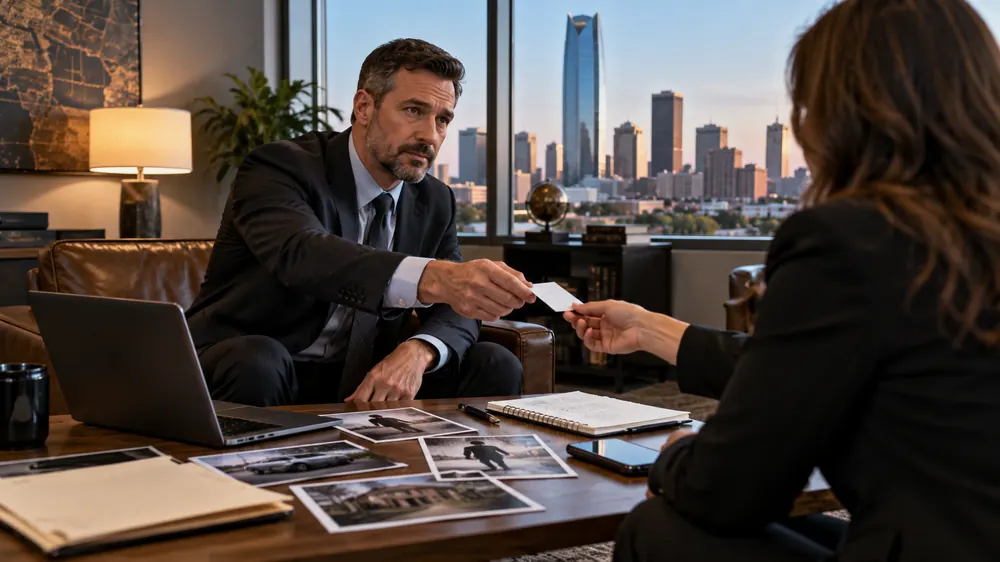
What does a criminal defense investigator do?
A criminal defense investigator tests the facts a charge rests on, independently, for the defense attorney.
A private investigator is not law enforcement. Daniel works for the defense, at the direction of defense counsel.
The work can include:
- interviewing again the witnesses for the state who agree to talk;
- finding and interviewing witnesses the police did not interview;
- documenting the scene;
- building timelines from records;
- locating video and asking its owners to preserve it before it is overwritten;
- saving public social media posts with the date of each capture;
- serving defense subpoenas under a process server license;
- testifying about the work performed.
Scene documentation for the defense is a careful record of a place as it is, so counsel can test what witnesses say they saw. It covers photographs and video, measurements, lighting and sight lines at the same time of day and season, traffic and pedestrian patterns, and nearby cameras and their owners.
Who asks for a defense investigation?
Criminal defense attorneys in Oklahoma. The attorney is responsible for the defense and directs the work.
Families of a person who has been arrested or charged often search before the attorney does. If that is you, the last section of this page says who to call first.
What is lawful in Oklahoma, and why does the defense attorney direct the work?
The defense attorney directs the work because Oklahoma's criminal discovery code affects what the defense must share with the state. Counsel decides whether an interview is written down, recorded or summarized orally, and what goes into a report.
On the state's request, the defense discloses the names and addresses of the witnesses it intends to call, with their relevant written or recorded statements, or summaries of oral statements. 22 O.S. § 2002(B)(1)(a)
The opinions, theories and conclusions of the attorney and the attorney's legal staff are not discoverable. 22 O.S. § 2002(E)(3)
Daniel makes no promise about what the prosecution will or will not see. That turns on the decisions counsel makes.
Preventing or attempting to prevent a witness from testifying is a felony in Oklahoma, and bribing a witness is a crime. 21 O.S. §§ 455, 456
Interviews are voluntary. A witness may decline, and that is respected. No pressure, promises or payment are used. An alleged victim is approached only as defense counsel directs, and only if that person agrees.
A private investigator may not suggest any connection with a government or law enforcement. 59 O.S. § 1750.9(B)
Daniel never presents the work as police work.
In Oklahoma, a person who is part of a conversation may record it, and so may someone who has the prior consent of one participant, unless the recording is made to commit a crime. 13 O.S. § 176.4(5)
Daniel records an interview only as a participant in it, and only when counsel wants a recording.
Getting someone's phone records by lying to a phone company is a federal crime. 18 U.S.C. § 1039
Phone company records come only through subpoenas or court orders that counsel obtains.
Willfully entering someone's yard, garden, pasture or field after being told not to, or without the owner's permission, is an offense in Oklahoma. The statute has no exception for investigators. 21 O.S. § 1835
Scenes are documented from public places or with permission.
Nothing on this site is legal advice. Ask your attorney how the law applies to your situation.
What will the defense attorney receive?
A record of what was done and what was found, in the form counsel directs:
- interview memos or statements;
- scene photographs, video and measurements, with the original files preserved;
- a timeline, with the source of each entry;
- a log of every contact attempt;
- Daniel, available to testify about interviews, scene work and records.
What should defense counsel have ready?
The first consultation is free. Work begins only after a written agreement is signed and a retainer is paid, as how it works explains. For that first conversation, it helps to have:
- the case number and the name of the client, so a conflict can be ruled out;
- the next court dates;
- the witnesses and places the defense wants looked at;
- the discovery counsel chooses to share.
What it costs depends mostly on how many witnesses and places are involved: interviews and locate work, scene visits (sometimes at a specific hour), travel and mileage, and records fees. All of it is set out in the written agreement before work begins. The cost guide explains what sets a price.
A family member was arrested: who should you call first?
If someone is in danger right now, call 911. Fuller Investigations is not an emergency service.
If a family member has been arrested or charged, call a defense attorney first, before you look for a private investigator for a criminal case. The attorney decides whether an investigator is needed and directs the work.
Do not text or post facts about the case. If the attorney wants an investigator, have the attorney call or text Daniel.
If anyone threatens you or a witness because of a case, call the police.
Fuller Investigations declines any matter whose purpose appears to be to harass, threaten, stalk or harm someone.